Mon - Fri 9:00 - 17:00 / Saturday 9:00 - 13:00


About
Science
The Science Department plays a vital role in building a strong academic foundation for engineering students by fostering analytical thinking, problem-solving abilities, and effective communication skills. The department offers integrated and outcome-based courses designed to support students in their engineering education and professional development.The department currently offers Engineering Mathematics for Engineering Programmes – Semester I, Engineering Mathematics for Engineering Programmes – Semester II, and Communication Lab. These courses equip students with essential mathematical concepts, logical reasoning, computational skills, and communication competencies required for engineering studies and industry applications.
Vison
To be a leading center of excellence in Sciences education, research, and innovation, empowering students with a strong foundation in scientific principles to meet the challenges of a dynamic world.
Mission
We aim to nurture well-rounded individuals by promoting ethical values, teamwork, communication skills, and leadership qualities alongside scientific knowledge.
To cultivate a culture of ethics, sustainability, and responsible scientific conduct in our students.
To empower students to think globally and act locally, preparing them for success in a diverse and interconnected world.
To continuously update our curriculum and programs to reflect the evolving needs of the scientific community and industry.
Integrated Courses
Course Introduction
Engineering Mathematics for Semester I is an integrated course designed to provide a comprehensive foundation in essential mathematical concepts while equipping students with practical software skills. This course bridges theoretical understanding with applied technology, integrating topics like matrices, vectors, trigonometry, complex numbers, and limits with hands- on practice using MS Excel and GeoGebra.
Course Objectives
At the end of the course, students will be able to:
- To develop the ability to solve systems of linear equations using determinants and practically apply these concepts by executing calculations in MS Excel.
- To enable students to understand vector operations, specifically the product of two vectors, and effectively use the GeoGebra graphing calculator tool to visualize and compute these operations.
- To equip students with the skills to solve physical problems using trigonometric ratios and complex numbers, while interpreting the results graphically using digital tools like GeoGebra.
- To teach students how to evaluate the limits of single- variable functions and apply these concepts practically by extracting limit values for discretized data using MS Excel.
Course Introduction
Engineering Mathematics for Semester II is an integrated course designed to build upon foundational mathematical concepts while emphasizing practical application and digital visualization. This course covers the essential topics of straight lines, differential calculus, and integration, seamlessly blending theoretical problem-solving with the use of modern tools like MS Excel and GeoGebra. By integrating these digital platforms, students will not only learn how to calculate mathematical solutions but also how to visualize, interpret, and verify their results in real-world engineering contexts.
Course Objectives
- To enable students to identify and analyze various linear models, and to practically interpret these mathematical visualizations using MS Excel and GeoGebra.
- To equip students with the ability to apply the fundamental rules and basic concepts of differentiation.
- To develop the skills to apply differentiation concepts to physical scenarios, such as the one-dimensional motion of a particle, and to verify their calculated results against visualizations generated in GeoGebra.
- To teach students how to evaluate integrals involving basic integrands and to use GeoGebra to compare and confirm their analytical results.
- To provide students with the ability to evaluate definite integrals for calculating physical properties like area and volume, and to practically validate these findings using the GeoGebra graphing calculator.
Course Introduction In an increasingly interconnected world, effective English communication has become a fundamental and irreplaceable life skill that bridges diverse cultures, professions, and industries. The Essential English Communication course equips learners with practical tools to develop confident, clear, and impactful communication rooted in real-life scenarios. By focusing on core language abilities alongside tone, context, and presentation skills, this course opens a plethora of doors for crafting a successful career.
Course Objectives
-
Enhance Core Language Skills: Improve and integrate practical listening, speaking, reading, and writing abilities across various real-life and professional scenarios.
-
Master Diverse Communication Mediums: Develop expertise in exchanging information through verbal, written, visual, non-verbal, and electronic media.
-
Apply Advanced Contextual Awareness: Learn to dynamically adapt tone, purpose, context, and body language to ensure clear and meaningful social and professional interactions.
-
Comprehend and Analyze Information: Enable students to effectively read, listen to, and comprehend audio-visual or printed text from diverse digital and traditional sources.
-
Deliver Persuasive Presentations: Empower learners to confidently present cogent, independent thoughts and structured analyses using the latest technological tools and correct grammatical syntax.
Faculty
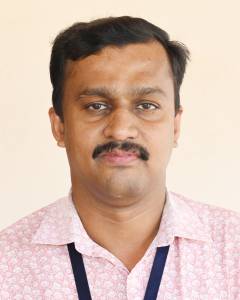
Rajesh Kakrannaya A
HOD
M.Sc, B.Ed

Shankar Bhat H R
Lecturer
MA, NET, SET(English), MA (Kannada)
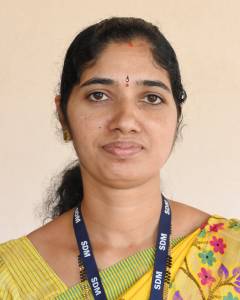
Shashikala K A
Lecturer
M.Sc, B.Ed